BESIX brings together expertise to tackle PFAS contamination
PFAS contamination presents the construction and infrastructure sector with a complex remediation challenge. Removing PFAS completely from the environment is technically very challenging and can entail high costs, particularly when the contamination has spread over large areas. Conventional remediation techniques then become complex, expensive and disruptive.
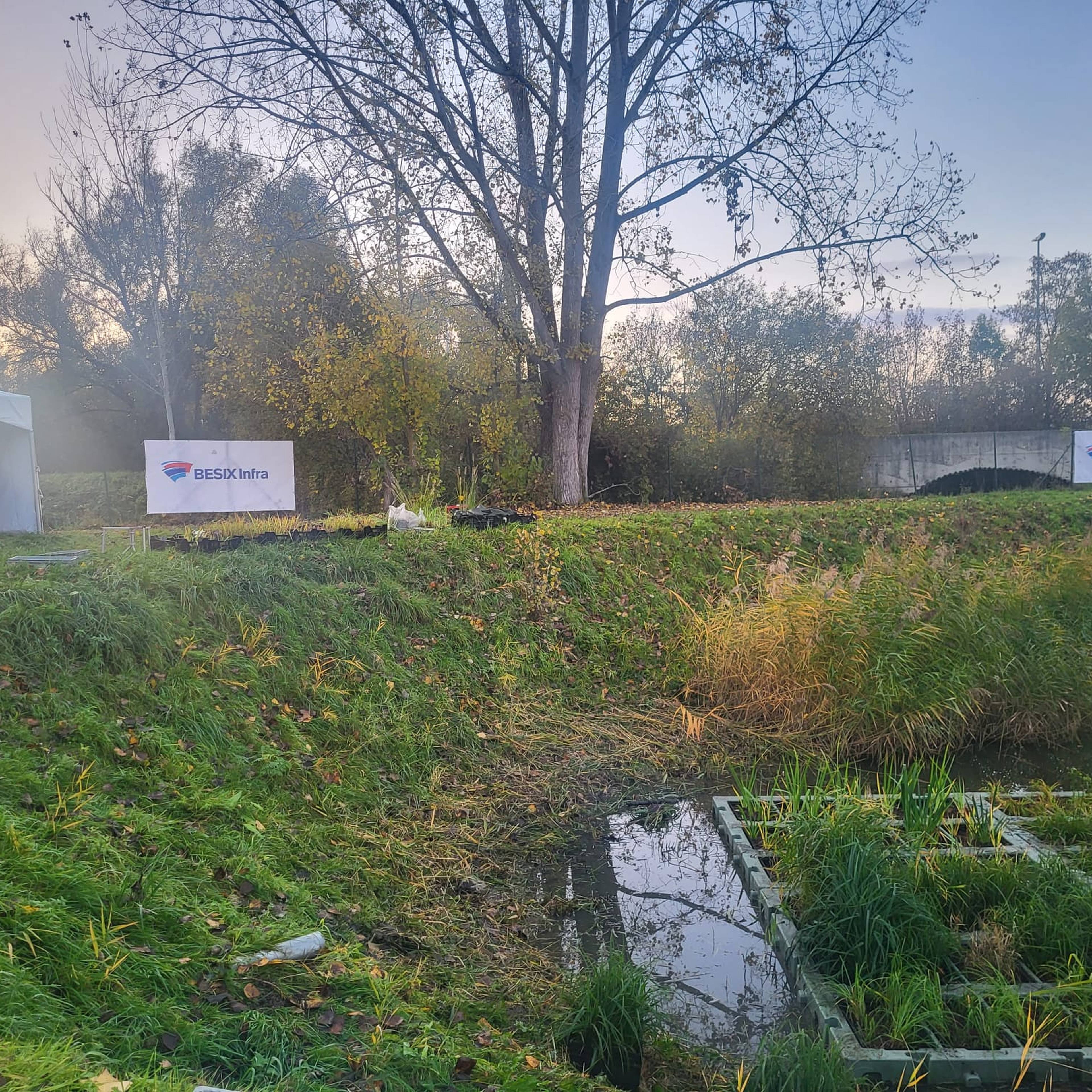
BESIX Infra is therefore collaborating with Hasselt University to investigate how plants can be used to control PFAS contamination in a targeted manner. The aim is to limit the spread and, where possible, remove PFAS from the environment through controlled harvesting.
Testing floating plant islands for PFAS remediation
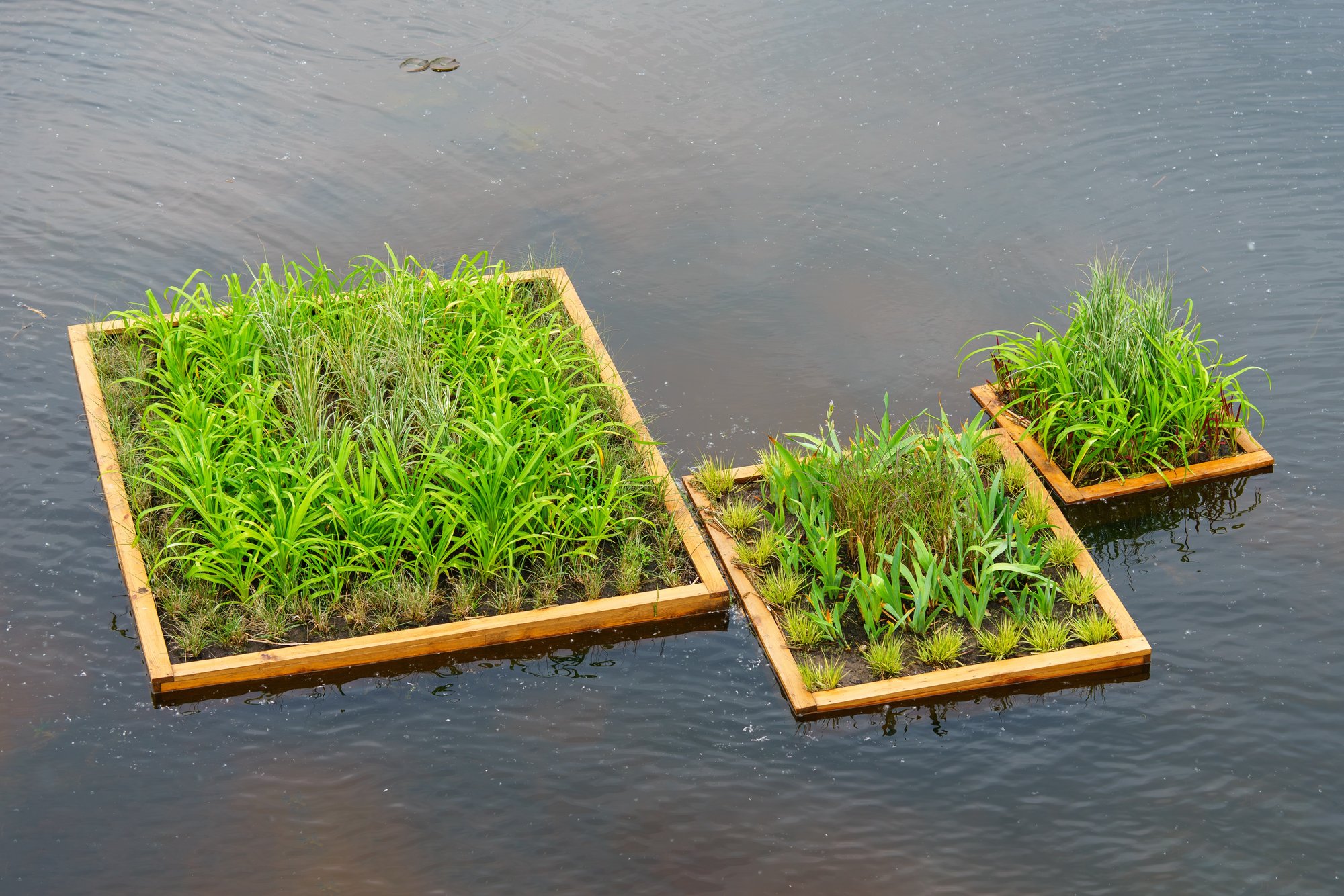
Floating plant islands were the focus of the visit to Alken. Researchers from the Centre for Environmental Sciences at Hasselt University are investigating how aquatic and marsh plants can help reduce PFAS levels in contaminated water whilst simultaneously providing a habitat for other species. The combination of scientific innovation, biodiversity and societal impact is central to this approach.
Initial research results indicate the potential of this method. In trials using heavily contaminated natural stream water, PFOS concentrations of up to 9.4 milligrams per kilogram of plant material were measured.
As part of the research, BESIX Infra is helping to assess the practical feasibility of the floating wetlands.
From research to on-site application
In addition to its research into floating wetlands, BESIX Infra is also gaining experience with phytoremediation of PFAS-contaminated soil. In a project commissioned by the Port of Antwerp-Bruges, the Ecology & Green team is using hemp plants to remove PFAS from the soil. Through this field trial, BESIX Infra is gaining experience with phytoremediation under the real-world conditions of an infrastructure project. At the same time, the team is also investigating where the technique is technically and practically feasible.
BESIX contributes expertise across the PFAS treatment process
The collaboration with Hasselt University forms part of a broader BESIX approach. Through LIFEDESTINY – a four-year European LIFE project led by IBA – BESIX Environment is developing a treatment process to separate PFAS from waste streams, concentrate and destroy it, and assess the safe reuse of residual streams. BESIX Environment contributes expertise in water treatment, process integration and environmental projects. Together with the field trial conducted by BESIX Infra, this research focuses on various stages in the treatment of PFAS contamination.