)

What does effective decarbonisation look like when it truly begins upstream?
Efforts still target the visible end of the process
The construction industry is under pressure like never before. Regulators are tightening emissions standards, investors are scrutinising carbon exposure, and clients are expected to deliver infrastructure that is not only functional and cost-efficient, but demonstrably low-carbon.
Yet too many decarbonisation efforts still target the visible end of the process: greener machinery, alternative fuels, cleaner sites. Important steps, yes - but often too late in the journey.
Here is the reality: by the time construction begins, most of a project’s carbon footprint has already been determined. Why? Because design assumptions, material choices, procurement criteria are early decisions that lock in emissions long before sustainability dashboards start tracking them.
At BESIX, this insight has transformed our approach. Decarbonisation is now treated as a strategic, multidisciplinary decision path across the full project lifecycle.
So the question is: What becomes possible when decarbonisation begins before the design is even set? We asked four of our internal experts - each representing a key project phase - to share how decarbonisation must be addressed from the very start.
Start upstream or start behind
Buildings and infrastructure account for a major share of global CO₂ emissions, and for most projects, the bulk sits in Scope 3 - materials, logistics and supply chains. The paradox is that the greatest leverage lies upstream, when projects are being defined and options are still open. That’s why, for us, decarbonisation begins before ground is broken, often before designs are finalised.
Tender stage: align ambition early
During tendering, sustainability is no longer a compliance appendix. Tools such as the CO₂ Performance Ladder help us and our clients translate intent into project‑specific reduction targets and concrete commitments. On projects such as A16 De Groene Boog or De Nieuwe Meer interchange in the Netherlands, sustainability objectives are agreed upfront and become shared constraints between client and contractor.
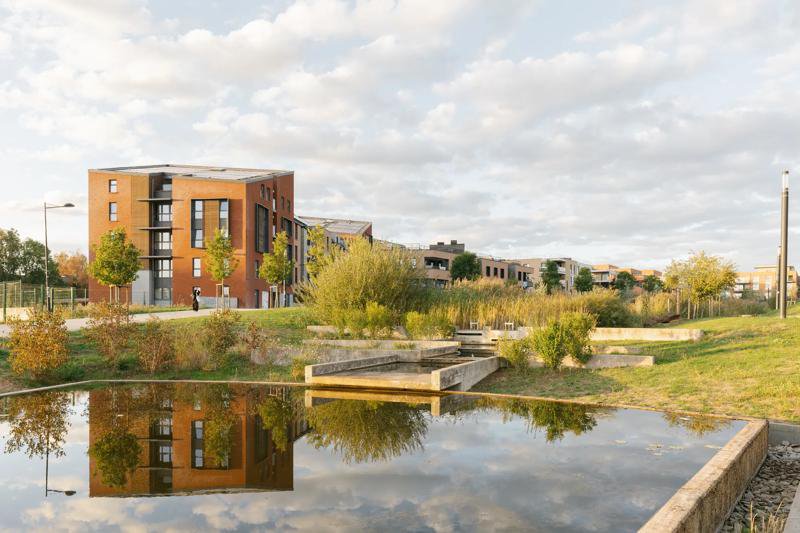
 "A16 De Groene Boog - The Netherlands")
Design: where savings are won or lost
If the tender sets the direction, design determines whether ambition is achievable. Life Cycle Analysis (LCA) has become a central decision tool for our engineers, not an academic exercise. By identifying carbon hotspots early, we can challenge default solutions that quietly drive emissions upward.
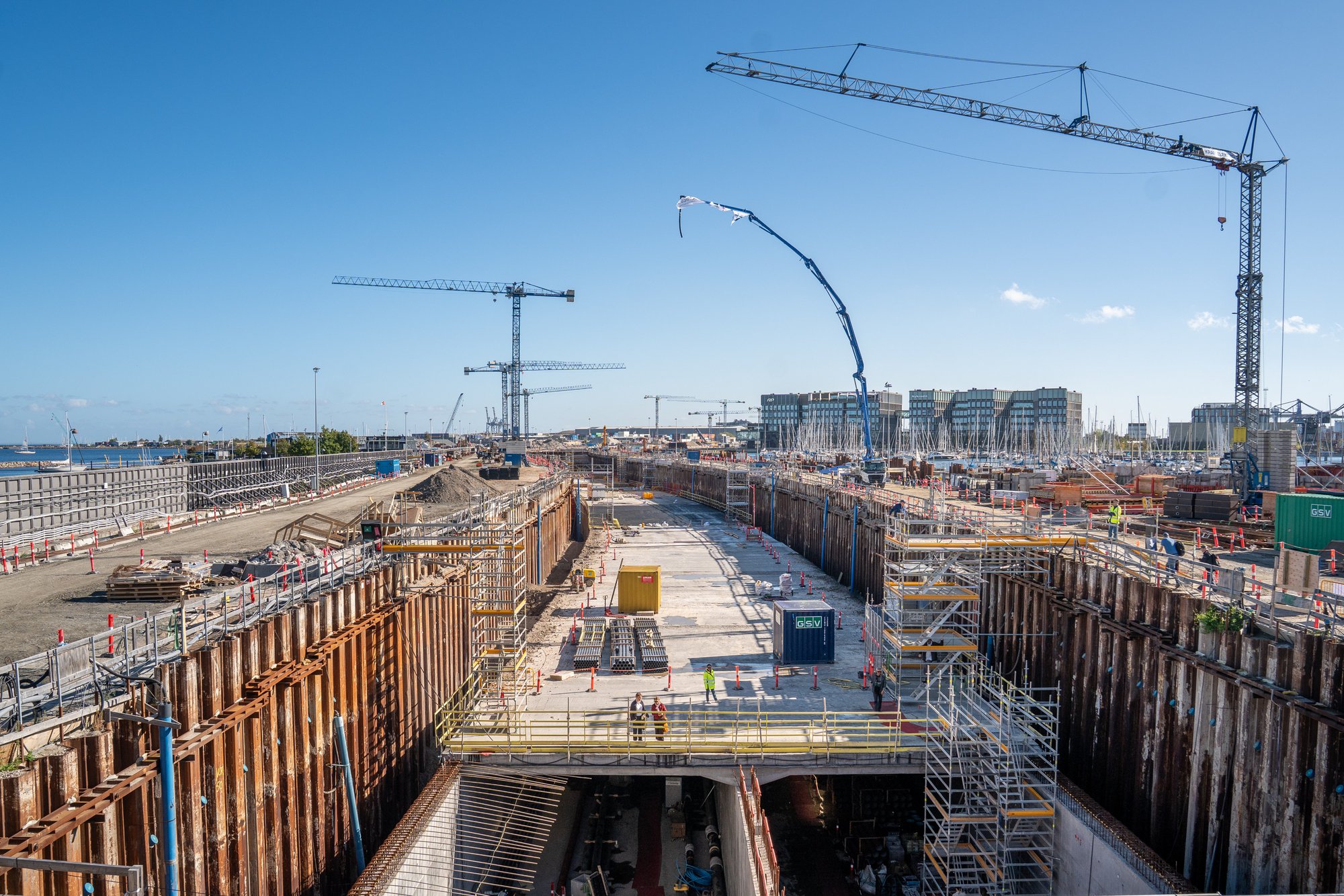
On a specific part of the Oosterweel Link project, a seemingly minor structural decision - how concrete was reinforced - proved decisive. Replacing traditional cross‑shaped steel bars with T‑shaped bars reduced steel use by 32%, avoiding more than 930 tonnes of CO₂eq, with no compromise on performance or safety.
Material passports, circular design and value engineering follow the same logic: prioritise reuse, enable future adaptability, and treat sustainability as a core design parameter, not an environmental add‑on.
Procurement: where intention meets market reality
Supply chains are often the largest and most complex source of emissions. Low‑carbon materials exist, but availability, cost and scalability remain uneven. Our response: collaborate, experiment, and share responsibility across the value chain.
Partnerships with suppliers such as Holcim have enabled pilot testing of lower‑carbon cement solutions. In Belgium, collaboration with Aquafin has led to trials of recyclable sewer pipes in sulphur concrete and geopolymer materials, reducing raw‑material emissions by up to 78%.
On large international projects like the Port of NEOM in Saudi Arabia, procurement strategies prioritised steel produced with renewable energy, while material reuse - such as repurposing half a million rocks on site - reduced both emissions and waste.
 "Aquafin sludge mono-treatment plant - Belgium")
Execution still matters especially when it keeps a promise
Low‑carbon construction practices remain essential. Electric machinery, biofuels, renewable energy on site, battery systems and transport optimisation all deliver measurable reductions.
On A16 De Groene Boog alone, the use of electric equipment and HVO biofuel avoided more than 23,000 tonnes of CO₂eq. Elsewhere, solar‑powered sites and waterborne transport of materials and excavated soil have further reduced emissions.
Beyond handover: performance that lasts
A project’s environmental impact does not end at delivery. Operational emissions increasingly define long‑term performance and public credibility. From smart building solutions to turnkey solar installations by BESIX Power, and support in achieving BREEAM and LEED certification, we help assets perform sustainably over decades.
The lesson for project owners
Decarbonisation is shaped by decisions made upstream - embedded in tenders, challenged in design, enforced through procurement, and respected during execution. That is where the largest reductions happen. And that is where the industry’s credibility will ultimately be earned.
For investors or project owners looking to address carbon where it truly matters, BESIX is open to continuing the dialogue.
)
)